

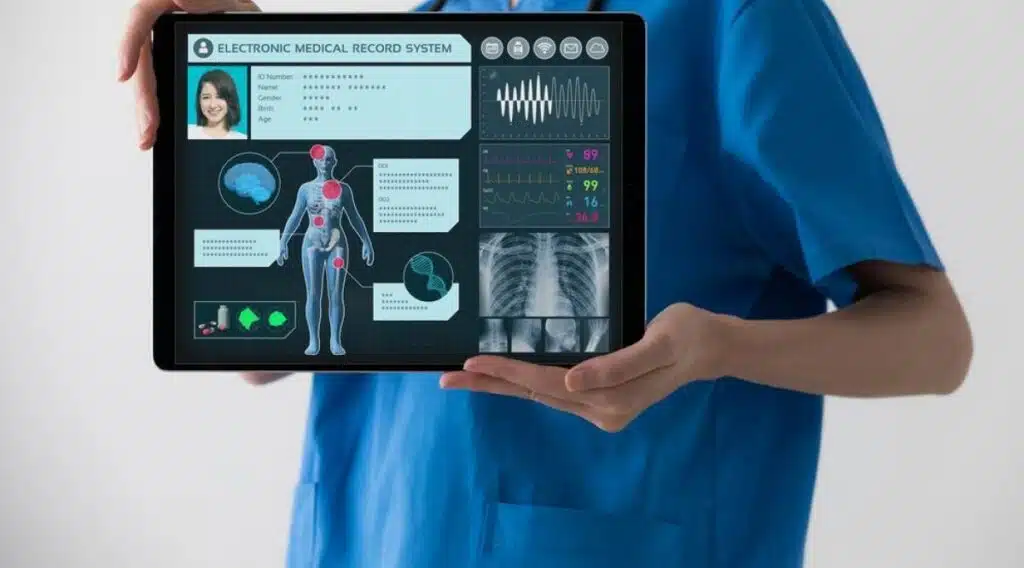
Digital Health Records: Building a Global Health Identity
Healthcare systems across the world have long struggled with fragmented patient records that are stored across different hospitals, clinics, and diagnostic centers. This fragmentation creates inefficiencies, delays, and risks in patient care, especially when individuals move between locations or consult multiple providers. Digital health records aim to solve this problem by creating a unified, structured, and accessible medical history for each patient. Instead of relying on physical documents or disconnected systems, digital records ensure that all medical information is stored securely in one place. This transformation is essential for enabling continuity of care and improving the overall efficiency of healthcare delivery.
DiamondMedicalCare introduces the concept of a global health identity, where every patient is assigned a unified digital profile that contains their complete medical history. This includes diagnostic reports, prescriptions, treatment records, and consultation data, all organized in a standardized format. By connecting healthcare providers and patients through a single system, it ensures that medical data is always accessible when needed. This eliminates the need for repeated tests and manual record transfers, reducing both cost and time. As a result, healthcare becomes more streamlined, accurate, and patient-centered across different regions and systems.
Continuity of Care Across Borders
One of the most significant benefits of digital health records is the ability to maintain continuity of care regardless of location. Patients often face challenges when traveling or relocating, as their medical history may not be readily available to new healthcare providers. This can lead to delays in diagnosis, repeated tests, and incomplete understanding of the patient’s condition. A global digital health identity ensures that all medical data travels with the patient, enabling seamless transitions between healthcare providers. This continuity is critical for managing chronic conditions and long-term treatments effectively.
With a unified system, doctors can access accurate and up-to-date patient information instantly, allowing them to make informed decisions quickly. This reduces the risk of errors and improves the quality of care provided. Patients also benefit from a more consistent healthcare experience, as their treatment history is preserved and accessible at all times. By enabling cross-border continuity, digital health records play a vital role in creating a truly global healthcare ecosystem.

A unified health identity ensures that your medical history is always with you, no matter where you are.
Improving Diagnosis and Treatment Accuracy
Accurate diagnosis depends heavily on the availability of complete and reliable patient data. In traditional systems, missing or incomplete records can lead to misdiagnosis and ineffective treatments. Digital health records provide a comprehensive view of the patient’s medical history, enabling healthcare providers to make more informed decisions. This includes access to past diagnoses, test results, medications, and treatment outcomes, all of which are essential for understanding the patient’s condition.
By integrating data from multiple sources, digital health systems reduce duplication and ensure consistency in medical records. This improves the accuracy of diagnoses and enhances the effectiveness of treatments. Doctors can identify patterns and trends in patient data, allowing for more precise and personalized care. As a result, digital health records contribute to better patient outcomes and a more efficient healthcare system.
Data Security and Patient Control
While accessibility is important, ensuring the security and privacy of medical data is equally critical. Digital health records must be protected against unauthorized access and misuse, requiring advanced encryption and security protocols. Patients need to have full control over their data, including who can access it and under what conditions. This builds trust and encourages the adoption of digital healthcare systems.
DiamondMedicalCare implements a patient-controlled access model, where individuals can grant or revoke permissions for healthcare providers. This ensures that sensitive information remains secure while still being accessible when needed. By combining strong security measures with user control, digital health systems can achieve a balance between accessibility and privacy. This approach is essential for building a reliable and trustworthy global healthcare platform.
Standardization and Global Integration
For digital health records to function effectively on a global scale, standardization is essential. Different healthcare systems use varying formats and terminologies, making it difficult to share and interpret data across regions. Standardized medical structures ensure that information is consistent and easily understood by healthcare providers worldwide. This includes uniform test naming, prescription formats, and disease classification systems.
Global integration also requires compliance with different regulatory frameworks and data protection laws. By adopting flexible and scalable standards, digital health platforms can operate across multiple regions while ensuring compliance. This enables seamless data exchange and supports the development of a unified global healthcare network. Standardization is a key factor in making digital health records universally accessible and effective.
Conclusion
Digital health records represent a major advancement in healthcare by transforming how patient data is stored, accessed, and utilized. They eliminate fragmentation, improve continuity of care, and enhance the accuracy of medical decisions. By creating a unified health identity, they enable patients and healthcare providers to interact more effectively within a connected system.
DiamondMedicalCare leverages digital health records as the foundation of its global healthcare ecosystem, ensuring that medical information is always accessible, secure, and consistent. As healthcare continues to evolve, digital health identity will play a critical role in building a system that is truly borderless, efficient, and patient-focused.

Leave a Reply